
Trusted by fast-moving companies




Recent success stories
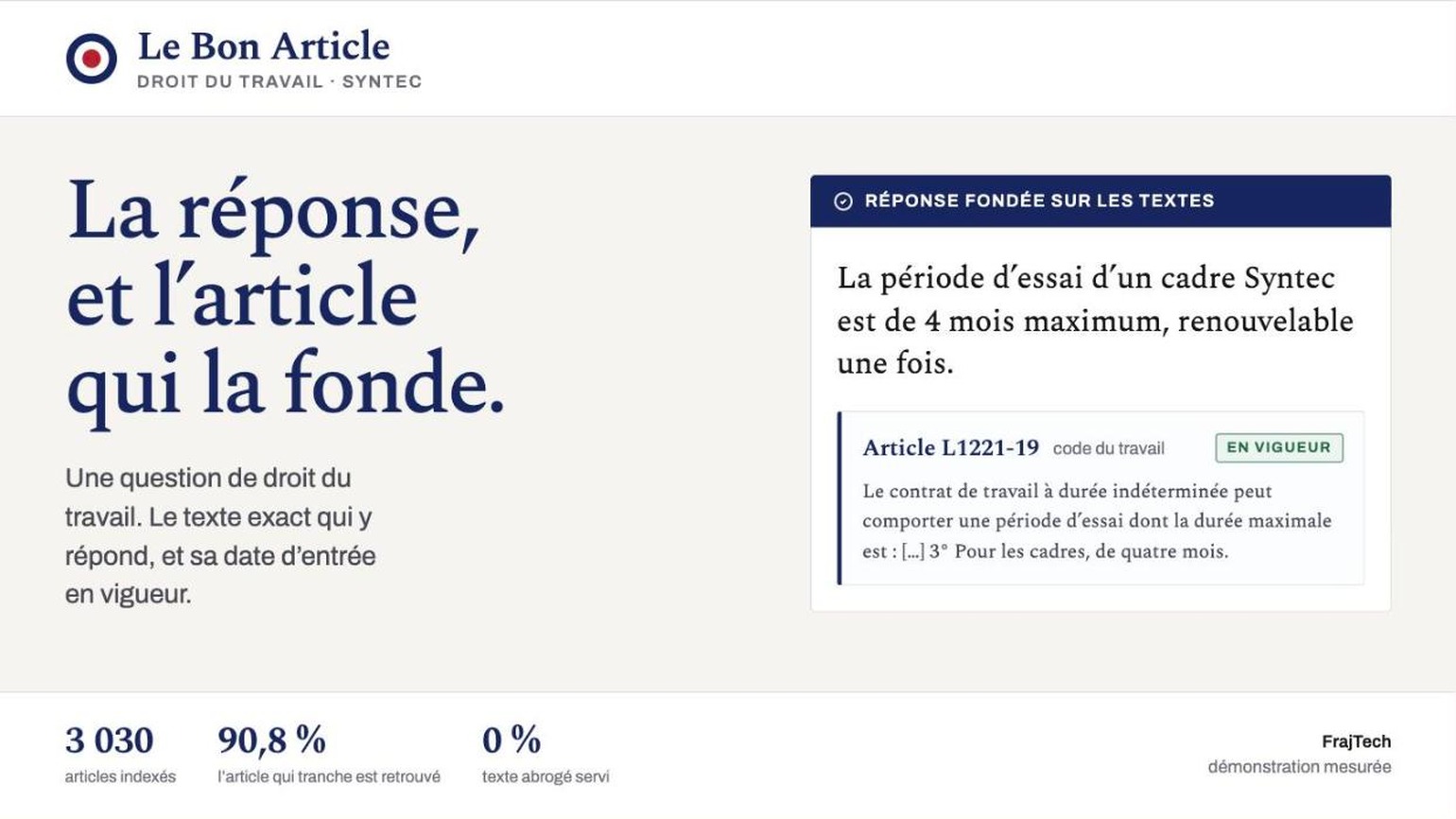
Le Bon Article – Measured RAG over French labour law
Retrieval over the Code du travail and the Syntec collective agreement, built so its own accuracy could be measured. Six configurations compared on a 142-question gold set, retrieval and generation failures scored separately, and a published catalogue of what it gets wrong.
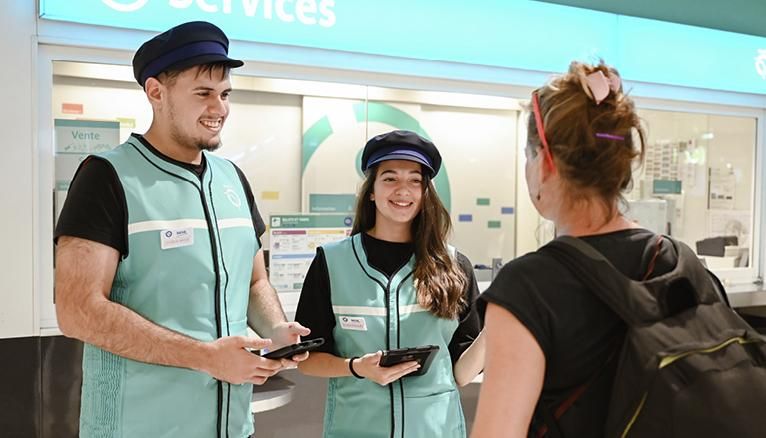
RATP event management system
Led the development of a critical management system for the 2023 Rugby World Cup and 2024 Olympics, using React, Node.js, and AWS. Implemented real-time monitoring with Datadog and containerized deployment with Docker & Kubernetes.
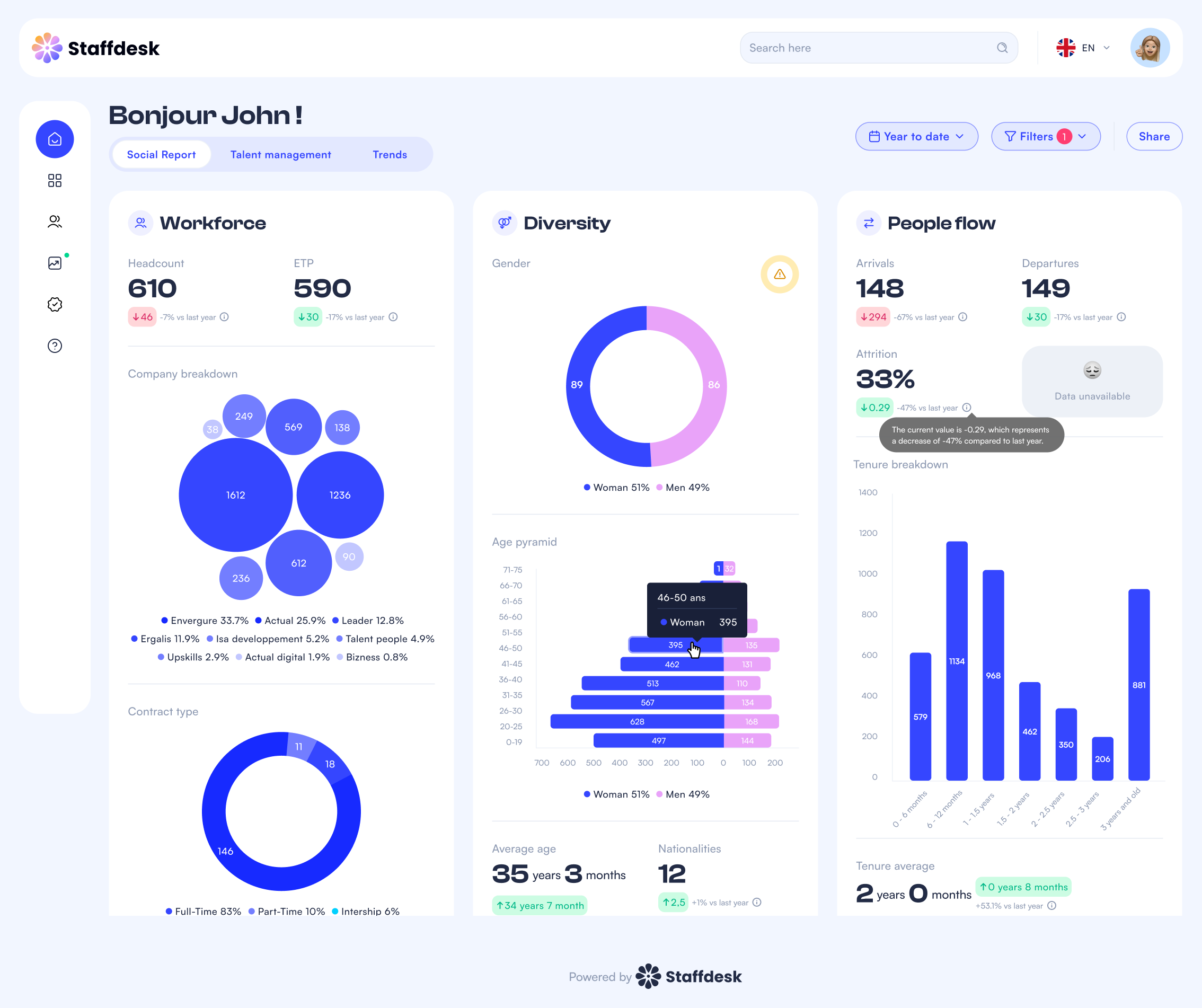
Staffdesk – AI Workforce Intelligence
Rebuilt an internal HR analytics platform into a scalable B2B SaaS, using LLMs, React, and PostgreSQL. Designed AI-powered dashboards and centralized data pipelines to eliminate inconsistencies and enable smarter decisions.

Elyra – Visual identity generation for music artists
A written brief and an artist's Spotify profile become finished release artwork: three visual directions, images generated against the chosen one, scored by a vision model, and packaged at every platform's exact specification.
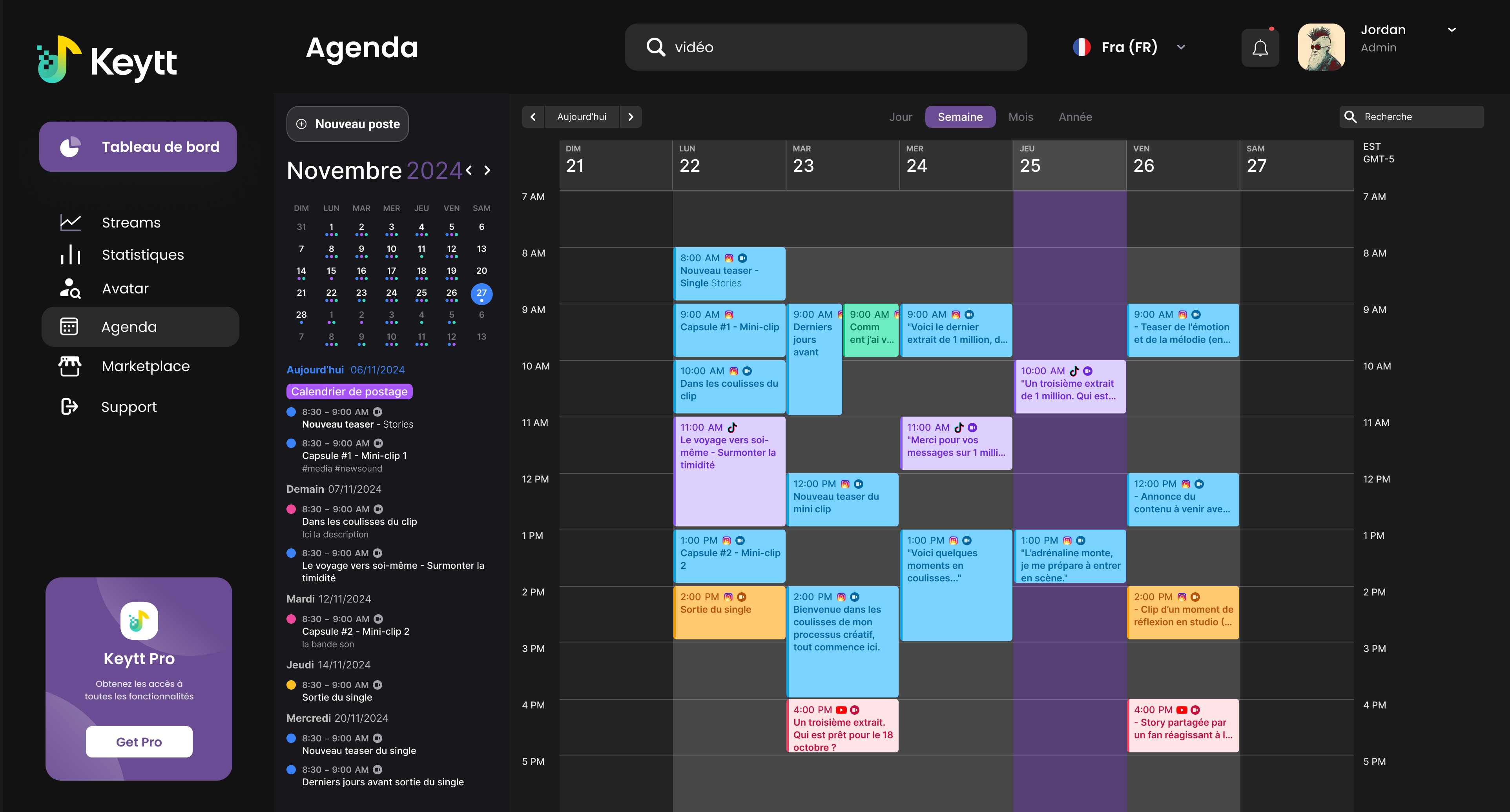
Keytt – Music Artist Growth Platform
Built a platform helping artists track data, improve visibility, and connect with creative experts. Led full-stack development with React, Node.js, and PostgreSQL. Integrated AI features for content planning and strategy using LLMs.
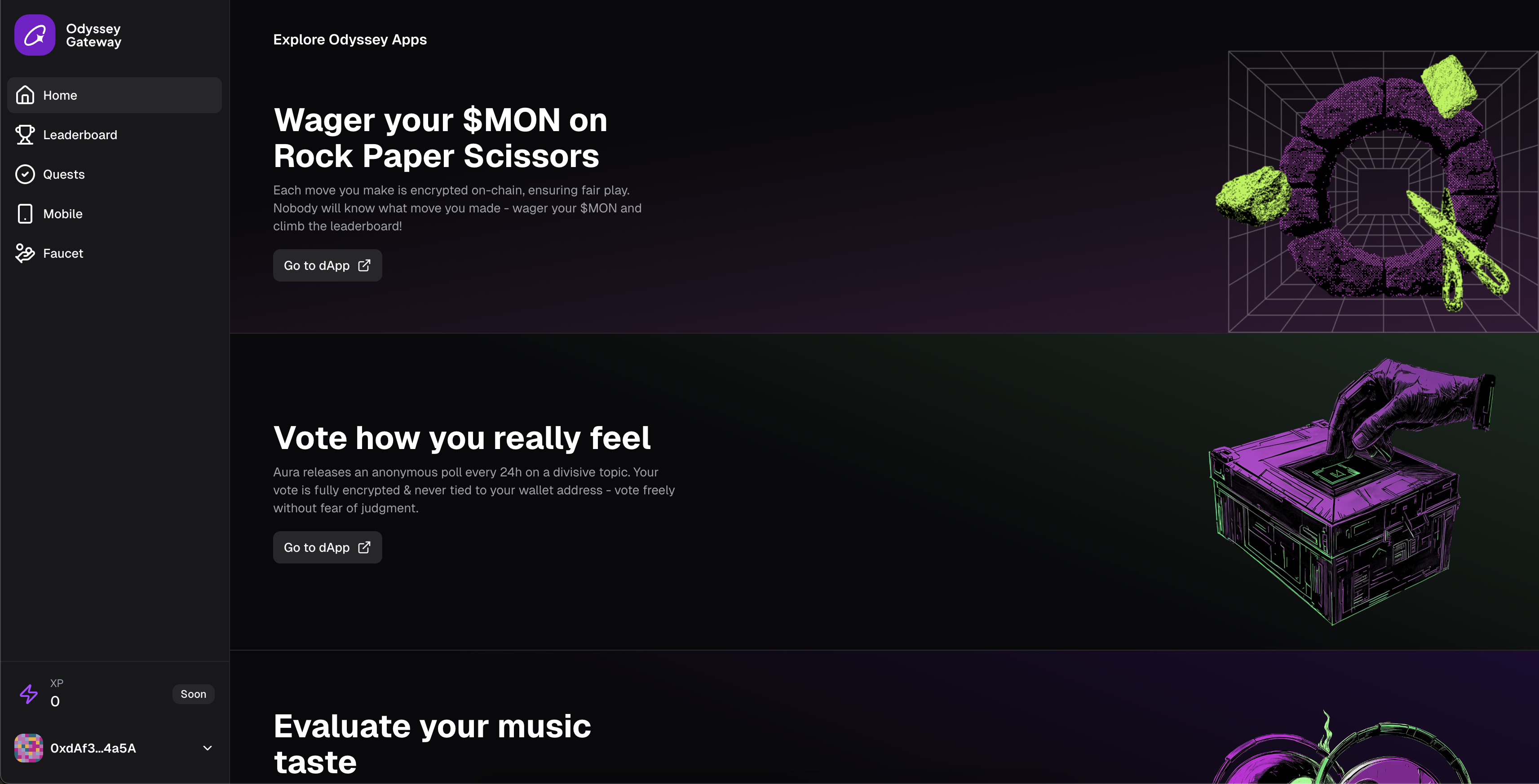
Gateway: Creator credentials platform
Developed a full-stack Web3 platform with Next.js and Solidity, featuring NFT minting, wallet integration, and real-time notifications. Built with TypeScript, Material-UI, and blockchain tools like Ethers and WAGMI.
What the people who worked with me say

Courriol Obouckang
CEO, Staffdesk
June 2025
Farouk is the dev craftsman behind the Staffdesk platform: hands-on, problem solver, team player, manager, ... having him with us is an asset, in our ambition to make Staffdesk a top tech and user-oriented product.
Translated from French

Anshika Madan
Consultant Developer, Thoughtworks
February 2025
I had the privilege of working with Farouk, and his technical expertise and leadership have been invaluable to our team. He is highly knowledgeable and has a remarkable ability to analyze and solve complex problems with well-thought-out solutions. Whenever we encounter challenges, Farouk provides clear guidance, breaking down intricate issues into manageable steps, ensuring that we not only solve the problem but also understand the reasoning behind it. His approach to reviewing code and pull requests is incredibly thorough. He pinpoints exact areas for improvement, offering constructive feedback that enhances code quality and best practices. His attention to detail and ability to simplify complex concepts make collaboration seamless and productive. I highly recommend Farouk to any team looking for a skilled, detail-oriented, and solution-driven leader who fosters collaboration and professional growth.

Rishabh Choudhary
Backend-Focused Full Stack Developer
February 2025
I had the pleasure of working with Farouk. He is an excellent team player with strong communication skills, especially when it comes to technical discussions. His ability to break down complex concepts, keen attention to detail, and open-minded approach to problem-solving made our collaboration highly productive. I truly appreciated his insights and expertise, and I would confidently recommend him to any team looking for a skilled and reliable professional.
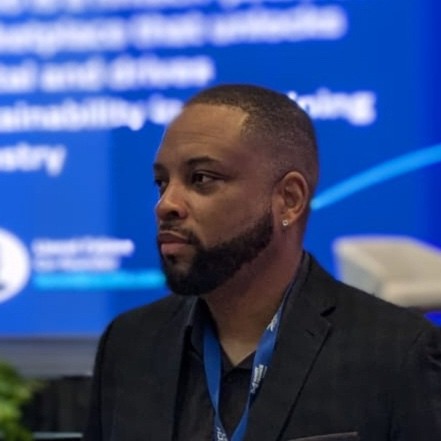
Lionel Fabert
Fondateur & Directeur Créatif, Keytt
Farouk is the invisible but central architect of Keytt. Thanks to his technical vision and his fast execution, he turned our creative ideas into a stable and intuitive product. His AI integration really set Keytt apart in a saturated market. Working with him means moving three times faster.
Translated from French

Bakary Doucouré
Directeur Stratégie Digitale, Keytt
Farouk does not just write code: he thinks product, strategy and scalability. From the start, he aligned our business vision with the technical constraints, making Keytt a powerful tool. His sense of anticipation and his demanding standards on UX were decisive.
Translated from French

Mathieu Rézel
Senior UX/UI Designer & People Manager
November 2023
It is a pleasure for me to recommend Farouk as a techlead. His extremely positive personality and his steady mood create a dynamic and motivating working atmosphere. Farouk approaches every challenge with a contagious optimism, which has a positive influence on those around him. As an exceptional problem solver, Farouk excels at resolving complex situations. His ability to constantly propose solutions shows his commitment to continuous improvement, which has had a significant impact on how our team has evolved. His constant drive to put forward proposals has contributed substantially to our ability to take on challenges and to progress as a team.
Translated from French

Bojan Stefanovski
Développeur Full Stack
November 2023
Working with Farouk has been a rewarding experience. His ability to understand and adapt quickly to technical challenges and his solution-centred approach were crucial to the success of our project. Farouk stands out not only for his technical skills, but also for his positive attitude and his team spirit. He creates a stimulating and friendly working environment, where everyone feels valued and motivated to give their best. Beyond that, his exceptional aptitude for solving complex problems with creativity and efficiency makes him an indispensable asset. He does not just find solutions, he also inspires those around him to think differently and to explore new paths. His contribution goes well beyond his role as Tech Lead, influencing the whole team positively and bringing considerable added value to all of our projects.
Translated from French

Dorian Masquelier
Software Engineer React/Node.js
November 2023
I had the pleasure of working with Farouk on a web application project for the RATP, where his technical expertise and his leadership qualities shone. He combines a deep understanding of the technologies used, namely React and Node.js. His vision was crucial to the success of our project, making him an invaluable asset for any team.
Translated from French

Diane du Peloux
Managing Consultant, Capgemini Invent
November 2023
I am delighted to recommend Farouk Ben Fraj. His capacity for adaptation and resilience is remarkable and has been a valuable asset for our team. They bring a positive energy and a creativity that energise the project. A solution-oriented Tech Lead to have on your team!
Translated from French
Three things, done properly
Not a service menu. The work that actually fills my weeks.
LLM systems in production
Retrieval, prompts, and orchestration that survive real traffic, with cost, latency and failure modes accounted for before launch, not after.
Integration with existing systems
The model is the easy part. The work is the auth, the data boundaries, the migration path, and the team that has to own it afterwards.
Evaluation and reliability
A written definition of "correct", a measured baseline, and a regression suite. Without it there is no way to tell an improvement from a coincidence.
Most of the work happens before the code
By the time I write the first line, the hard part is usually already decided: what the system actually does, what the data allows, and what nobody wrote down.
Mapping the context
Reading the existing system, the data, and the constraints nobody wrote down. This is where the real problem is usually found.
Writing code
A smaller part of the project than people expect, and deliberately so. The code is the cheap part once the problem is clear.
Internal tooling
Evaluation harnesses, scripts, dashboards. What makes the result reproducible after I leave.
A team that goes straight to the code pays for it later, in the part of the project that is hardest to schedule.
Where I have worked
FrajTech
AI Tech Lead, freelance·
Document retrieval over French labour law and the Syntec agreement, and image pipelines scored by a vision model, shipped for B2B clients.
Staffdesk
Tech Lead·
Legacy platform rebuilt into a multi-tenant SaaS on AWS, adopted by several large accounts: 30% MRR growth.
RATP Group
Fullstack Tech Lead·
2023 Rugby World Cup and 2024 Paris Olympics, over 1,000 concurrent users, including underground in the metro.
Raisponse·Frontend Tech Lead·
Gateway·Fullstack Web3 Developer·
Trusk·Backend Developer·
Capgemini / Sogeti·Fullstack Developer·
Ministère de l'Intérieur·Systems Administrator·
Education
- Master of Science, ingénierie logicielle, EPITECH, Paris
- Bachelor of Science, informatique, Université de Paris
Something stuck between demo and production? Tell me about it.
Let's talk
Pick a slot that suits you. If you would rather write first, the address is right below.
What happens on the call:
You describe the stack, what already works, and where the last 20% stops
An honest read on feasibility, including when the answer is no
What it would take to get it into production, and roughly how long
No pitch, no pressure